

 Figma Project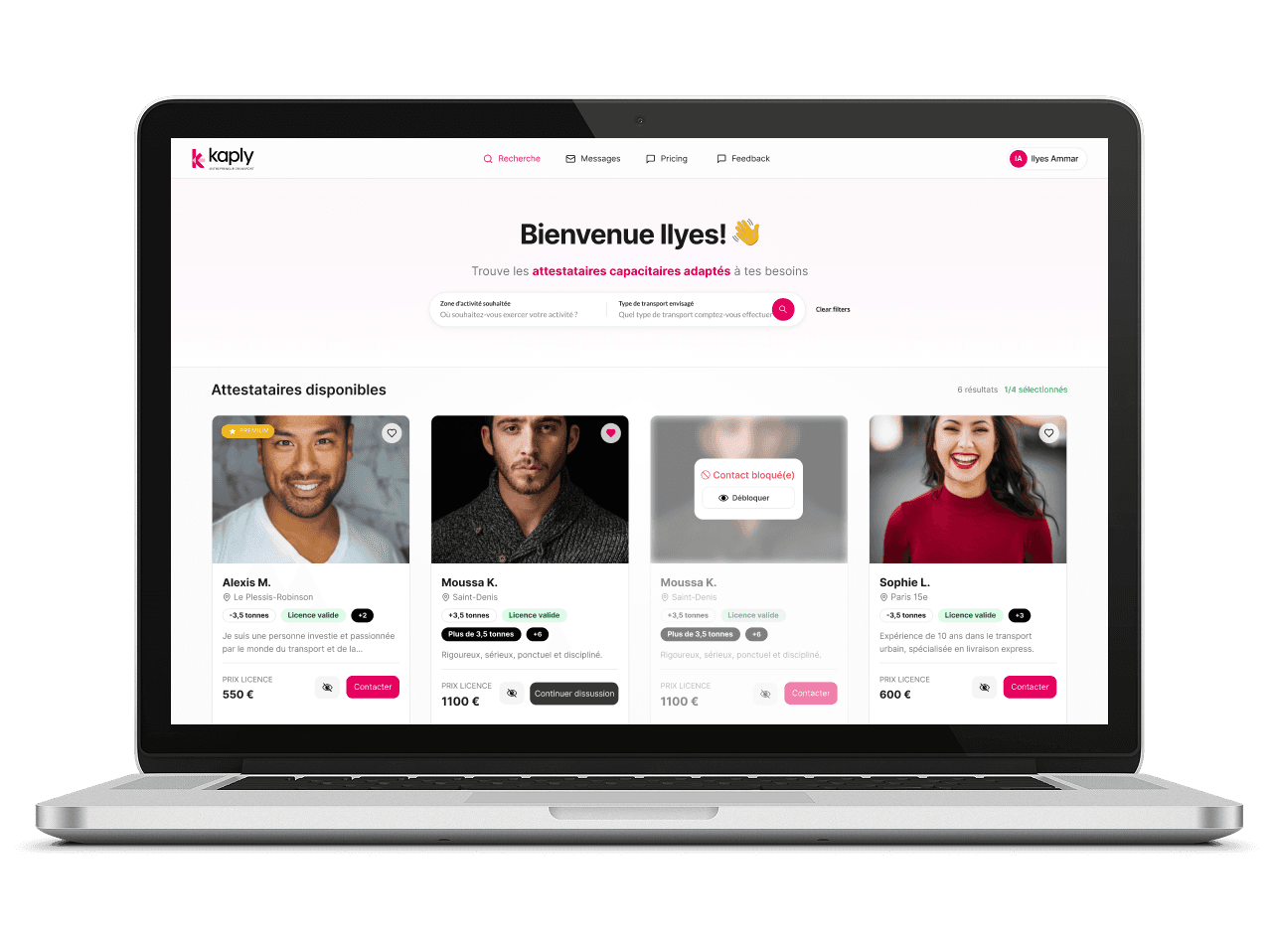
The project itself :
Project Overview
Kaply is a French marketplace that connects verified capacitaires (external transport managers with the official attestation) with entrepreneurs who need a qualified manager to start or operate a transport business. The platform focuses on legal compliance, transparent offers, and fast matching so users can move forward with confidence.
Problem:
Finding a reliable capacitaire is often slow and unclear. Entrepreneurs struggle to understand the rules, compare offers, and know who they can trust. On the other side, capacitaires receive unqualified requests and waste time screening.
Goal:
Create a simple, trustworthy flow that helps entrepreneurs get matched with verified capacitaires quickly, while keeping the process compliant, transparent, and easy to follow from start to contact.
My role:
UX/UI Designer leading the Kaply website and marketplace experience.
Responsibilities:
user research & competitor analysis
defining user flows and information architecture
low-fidelity wireframes (paper + digital)
high-fidelity UI design system and screens
prototyping and interaction design
usability testing and iteration based on feedback
All about the user :
User Research
I spoke with new transport entrepreneurs and a few capacitaires to understand how they currently search, what blocks them, and what makes them trust a match. A clear pattern showed up: people don’t just need “a contact” they need a safe, legal, and simple path. Most users feel overwhelmed by regulations, don’t know what documents are required, and worry about scams or non-compliant agreements. They want a straightforward experience where they can compare options quickly and feel confident before starting a conversation.
Pain Points
Information:
Transport rules and requirements are scattered across many sources. Users aren’t sure what applies to them, what to prepare, or what a “good” capacitaire offer looks like. Pricing and expectations are often unclear.
Interaction:
Current ways of finding a capacitaire rely on informal groups and messages. Conversations start without structure, important details get missed, and it’s hard to filter serious offers from spam or mismatches.
Experience:
The process feels stressful and risky. Many users fear wasting time, choosing the wrong person, or ending up in an arrangement that isn’t fully compliant. They want a smoother journey with clear steps and stronger trust signals.
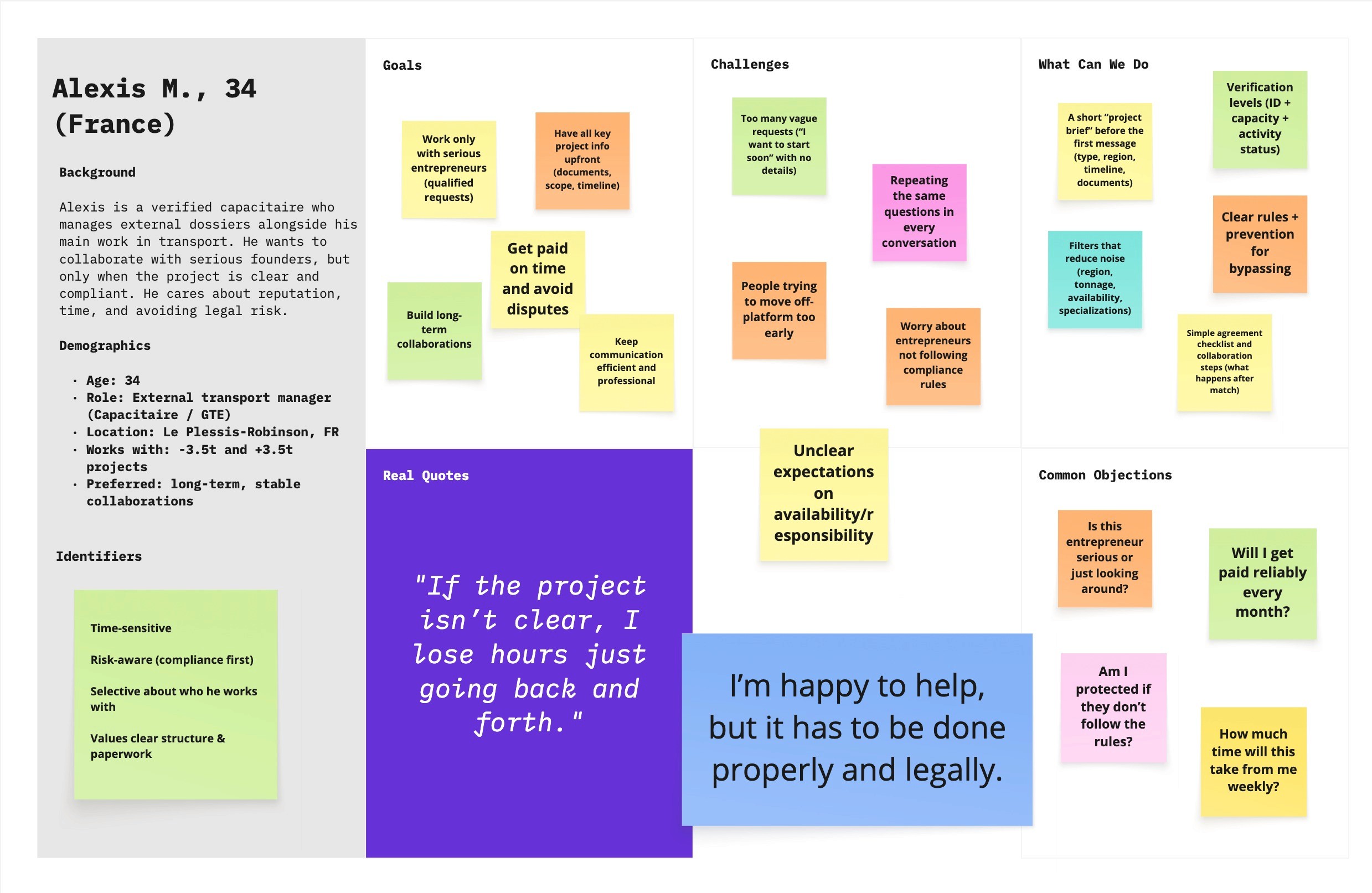
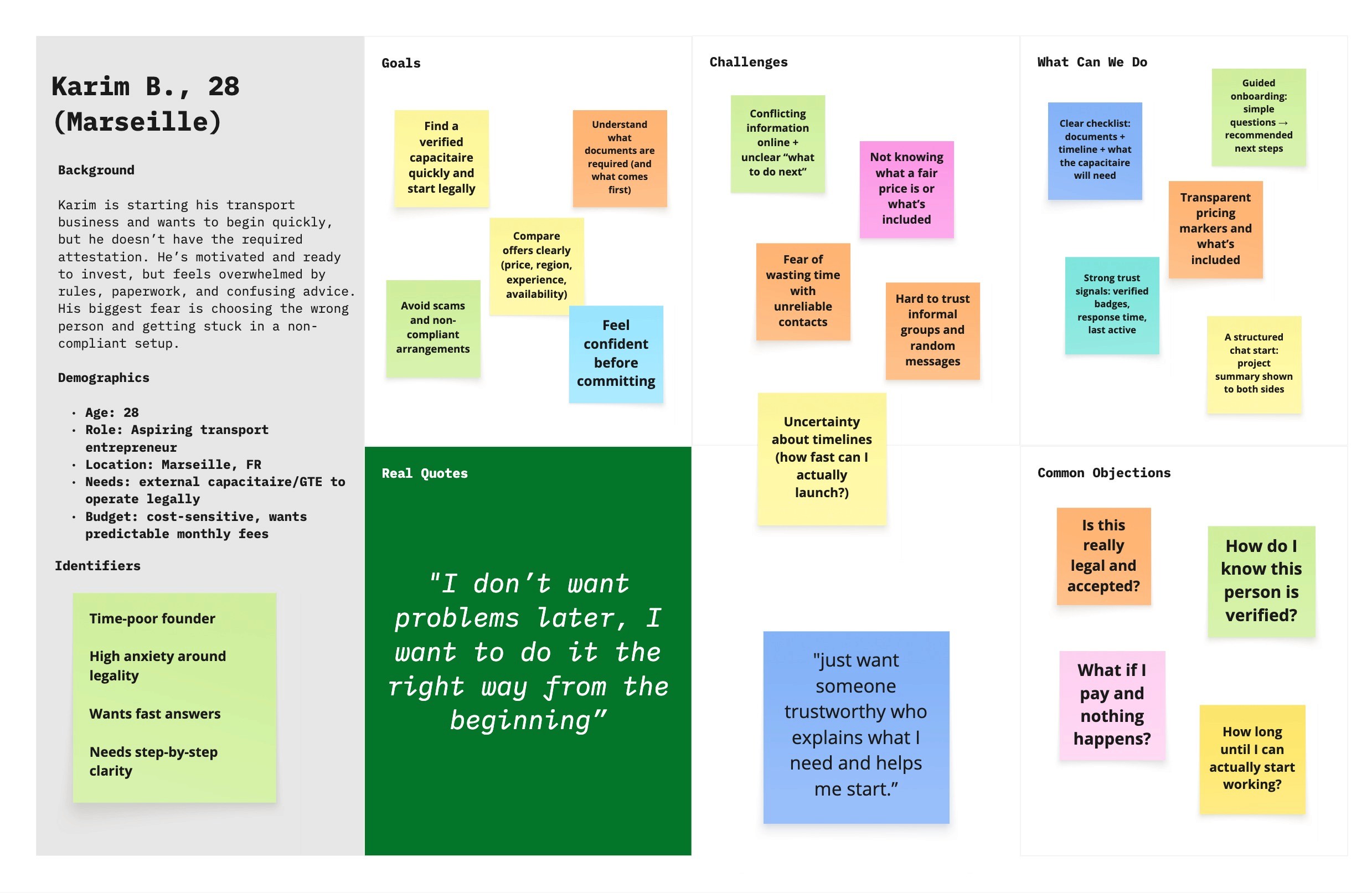
User Personas
Personas were defined based on user interviews and patterns we observed during research. The goal was to represent the two main sides of the platform and highlight what blocks them from reaching a successful, compliant match.
User Journey Map
This journey map shows the typical experience an entrepreneur has on Kaply when trying to find a verified capacitaire and start operating legally. It highlights key actions, emotions, and where the product can reduce friction and build trust.
I developed a user journey map of Mark's experience with the site to pinpoint potential pain points and identify areas for improvement.
Goal
Find a verified capacitaire, understand the requirements, and secure a compliant match to launch a transport business.

The project schematically :
Starting the Design
To start shaping Kaply, I first mapped the problem into clear flows and simple sketches. I created quick schemas and storyboards to define the platform structure, the key pages, and the information that matters most for both entrepreneurs and capacitaires. After that, I moved from paper wireframes to digital low-fidelity wireframes, then built a clickable prototype to test the core journey (search → compare → contact → match) and refine it with stakeholder feedback.
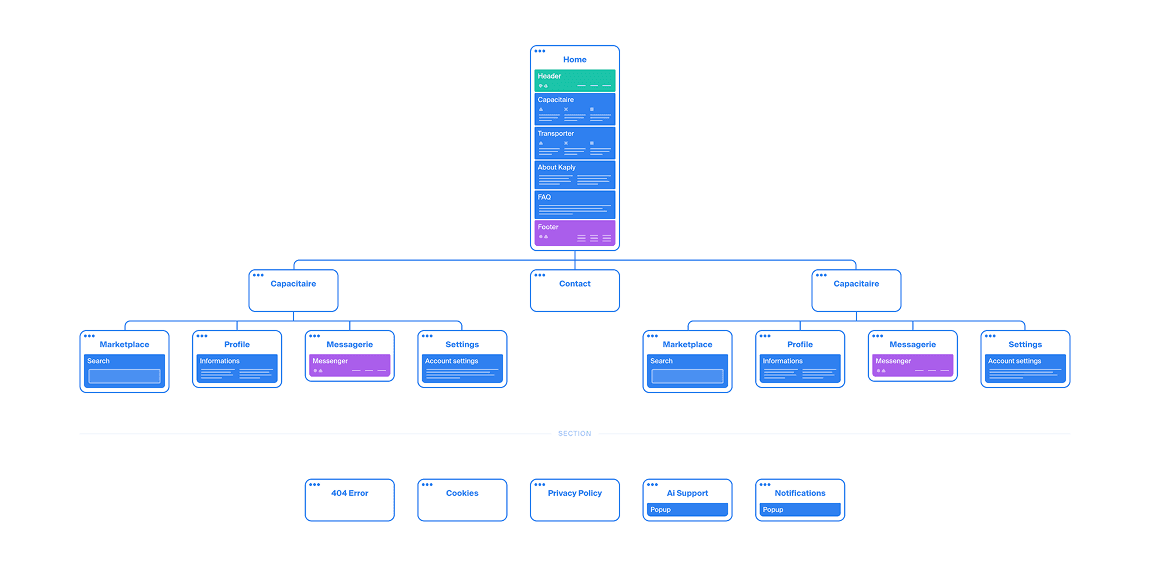
Sitemap
A structured map of the website pages and content hierarchy, used to keep the platform simple and easy to navigate.
Next step: building the website map.
At first, the structure was more complex and included extra sections and services. I simplified it to focus on the pages users actually need to complete the main goal: finding a verified match quickly and understanding the process. The sitemap helped keep everything consistent, reduce friction, and make sure the most important actions are always easy to reach.
Usability Studies
To validate the first Kaply prototype, I ran a set of quick usability tests with a few entrepreneurs and capacitaires. I used simple tasks (find a profile, compare options, start a conversation, and understand the next steps) and collected feedback through notes and short follow-up questions. After reviewing the sessions, I grouped the findings into clear themes and turned them into actionable improvements. The goal was to catch confusion early and remove friction before moving to high-fidelity design.
Profile clarity:
Users wanted faster answers on trust and fit when scanning a capacitaire. They asked for clearer signals like verification status, availability, and what’s included in the monthly price.
Comparison:
Users struggled to compare multiple capacitaires efficiently. They wanted a simple way to shortlist, compare side-by-side, and remember who they liked.
Contact & next steps:
After clicking “contact”, people were unsure what happens next. They asked for a more guided message start and a clear explanation of the steps after a match is selected.
The clear version :
Refining Design
After the usability studies, I translated the insights into a clearer, more structured interface. I refined the layout, tightened the content, and improved the flow so users can move from discovery to contact without hesitation. Once the static high-fidelity screens were ready, I built a high-fidelity prototype to test the improved interactions and hand off a realistic vision of the final product.
Mockups
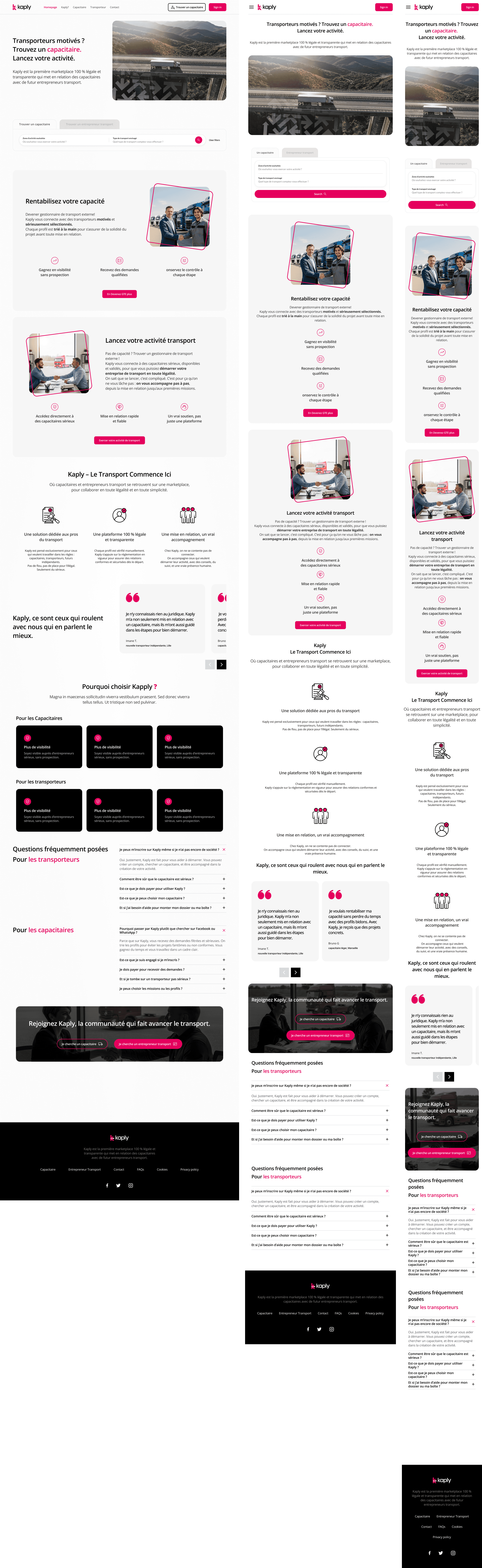
I created high-fidelity mockups for the key pages of Kaply, focusing on clarity, trust, and speed. The design system used consistent typography, spacing, and components to keep the product simple while still feeling professional. The final mockups demonstrate the full user journey from browsing verified profiles to selecting a match and understanding what to do next.
Website

Transporter

Capacitaire

The project schematically :
Outcome
In the final phase, I summarized the key takeaways from the design process and defined the next steps needed to move Kaply forward.
Takeways
Users care most about trust and clarity: verification, what’s included, and what happens next.
A simple structure (browse → compare → contact) reduces hesitation and makes the platform feel safer.
Small UX improvements (clear labels, better guidance, fewer steps) had a big impact on confidence.
Impact:
The final design makes it easier for entrepreneurs to find verified capacitaires, compare options quickly, and start a compliant collaboration without confusion. On the capacitaire side, the experience supports more structured requests, saving time and reducing unqualified conversations.
What I learned:
Even small changes can significantly improve user confidence especially in a marketplace where legality and trust matter. The biggest lesson was to keep focusing on what users need in the moment: clarity, proof, and a guided path forward.
Next Steps
V2 ready for development
I am currently working on Kaply V2, and the updated version is now ready to move into development. I made several improvements based on feedback, simplified key flows, and refined the UX to reduce friction and increase trust.
Follow-up testing & new features
Run another round of usability testing on the V2 flow and continue identifying additional user needs to ideate and prioritize future features.